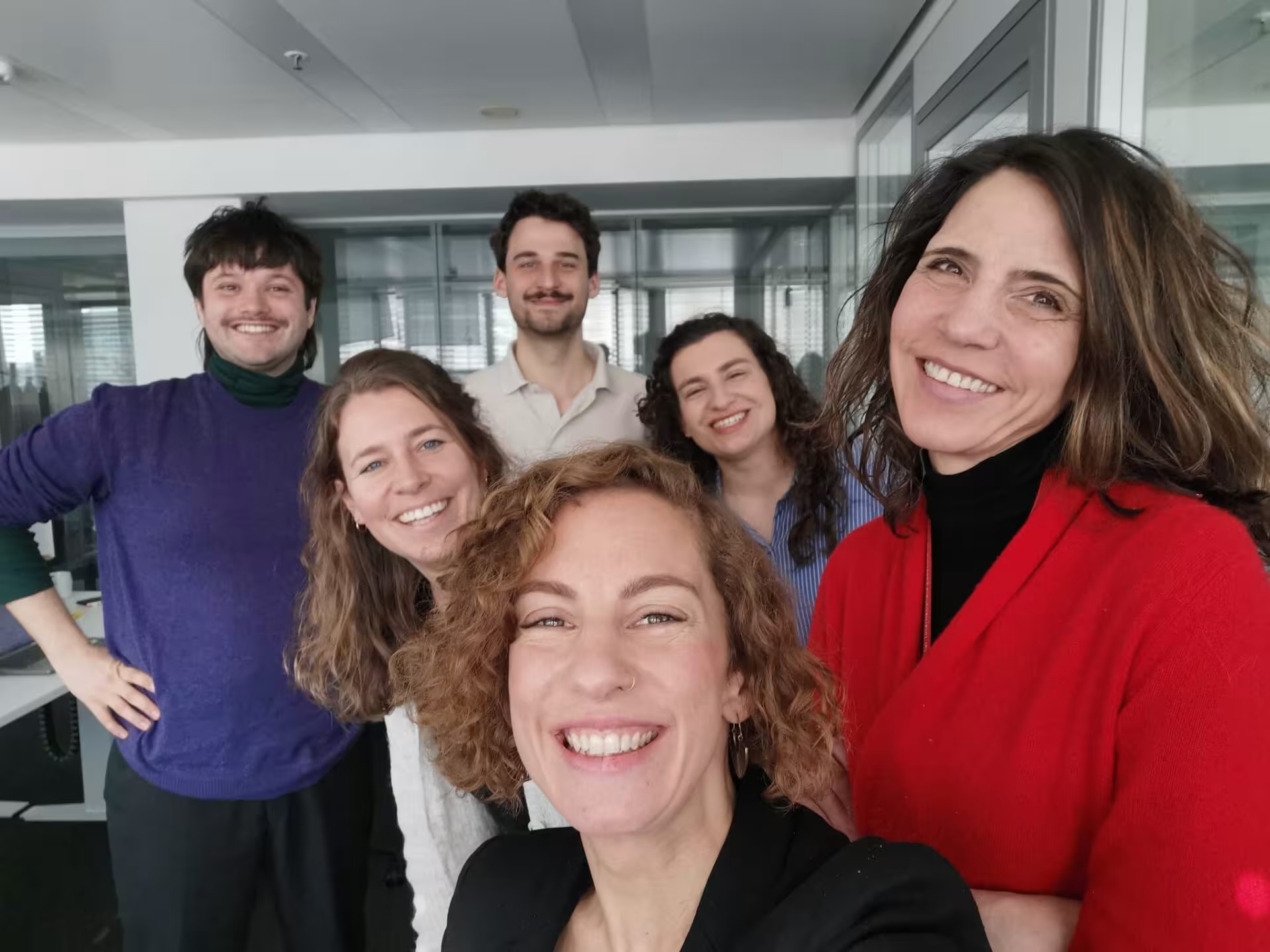
After more than three and a half years, I am closing my chapter at the GIZ Data Lab. Looking back, time has flown by so fast, and yet it was filled with so many immensely gratifying, exciting, and humbling moments that it makes my head buzz. In April 2022, still somewhat stuck in Covid-mode, we had our first virtual team workshop, officially initiating the “Data Lab 2.0” phase, consisting of Catherine, Robin, Erik, and myself. Only a bit later, Lea joined our team as the first of many brilliant young interns who would support us in the following years.
I immediately started working on the topic that would accompany me throughout the next years and become very close to my heart: Data Feminism. And we would not be the Data Lab – led by Catherine with all her charisma, big heart, and even bigger network – if we hadn’t started off directly with an in-person interview with Catherine D’Ignazio, who together with Lauren Klein coined the term Data Feminism and got us all hooked on the topic with their brilliant book!
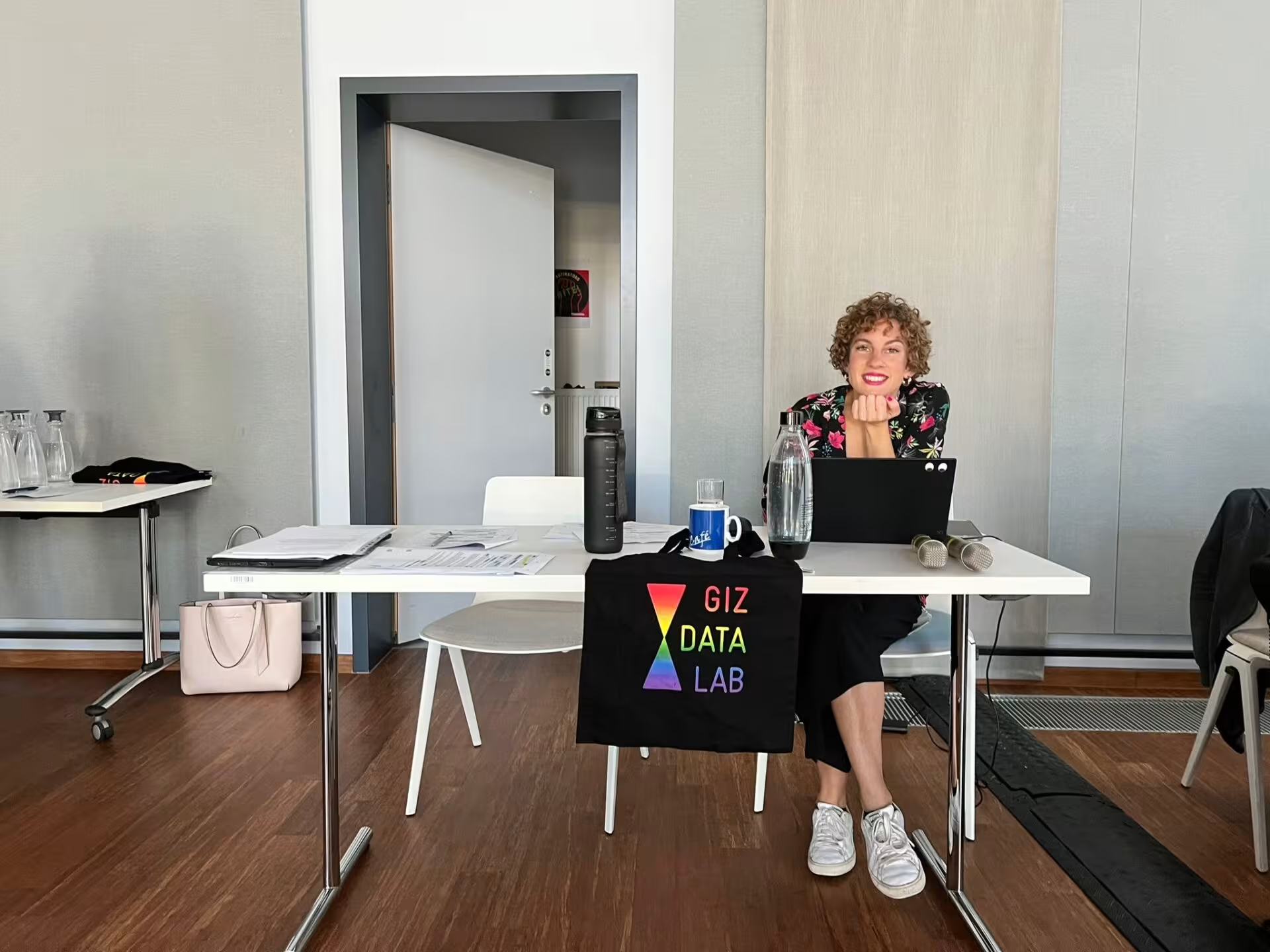
From there, it was laying cornerstone after cornerstone to position the topic inside GIZ, get an understanding of our own working definition, and adjust the concept to our reality in Development Cooperation. The interest was huge, and after a bit more than a year we had conducted an event series and put together a report on Data Feminism, including moonshots for becoming a truly data-feminist organization, with the help of so many engaged colleagues and external partners.
In 2023, we managed to inscribe Data Feminism into the new strategy on Feminist Development Cooperation of our commissioner BMZ, and also into a new global project that would deal with the topic.
2023 was also the year of Generative AI, and along came another event series with the participation of Luciano Floridi and speakers from OpenAI!
In the following years, we were able to test different approaches to Data Feminism on the ground and put theory into practice: from feminist city planning to university curricula, data cooperatives, and social license labs, we juggled new concepts and ideas – some of which developed into experiments, whereas others are still waiting for their time to come. My personal learning was not to be taken aback when a planned experiment got stuck, but rather to overcome frustration and always look ahead – an important skill when working in an innovation lab, if you ask me. Sharing successes but also doubts with my team helped me immensely during this time, and I am very grateful for the deep trust and positive mindset we developed among each other.
After Erik left the team to join our sister project, the Data Service Center, Teresa and Anna-Lisa came in and completed the team in more than just professional ways. I could not be more thankful for a working environment that has always been so respectful, appreciative, supportive, and so, so much fun! Thanks team, you were the best! And also thanks to Catherine, who showed us how to always push further and at the same time was always able to stop and listen to us, give us room to develop, and to shine.
Data Lab is only part of a bigger team working on innovation, learning, and knowledge management, and our line manager Arlett did a great job integrating us into this team and having us tap into the immense creativity of all colleagues around us, which was truly inspiring!
I am leaving with a sad face, thinking of all the interesting topics and projects and all the brilliant, warm, and funny people I am leaving behind. However, there is also a happy face looking forward to some months of sabbatical at Brazilian beaches and afterwards to new challenges and tasks in the GIZ context.
Thanks to all of you, all the best for the GIZ Data Lab!