
Material
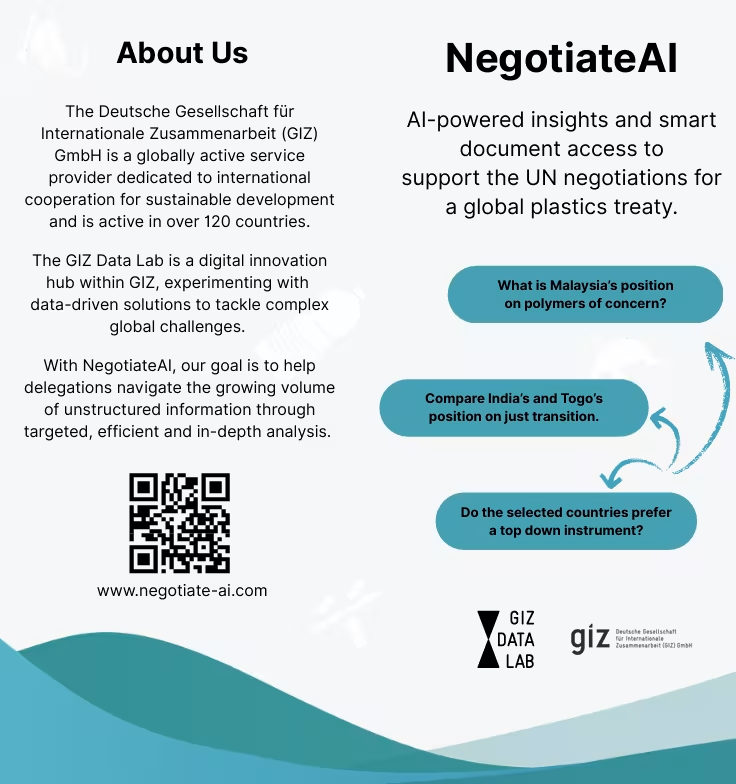
NegotiateCOP Flyer
NegotiateCOP is an AI-assisted platform that supports negotiators and analysts navigate the vast amount of information in the COP negotiation process.
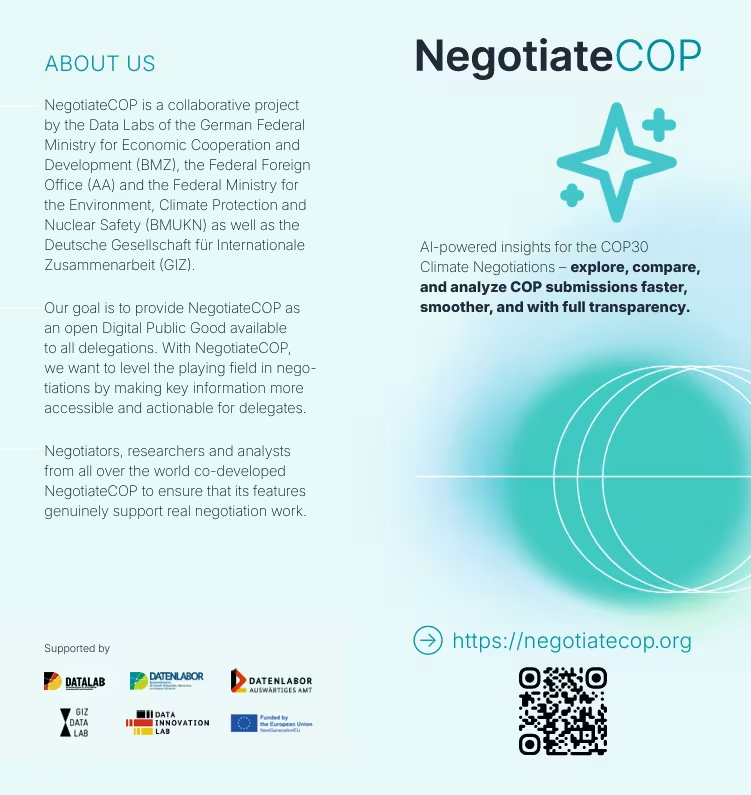
NegotiateAI Flyer
Negotiate AI is a web-based tool designed to support the UN negotiations for a global plastics treaty. It assists delegates by providing AI-powered insights and smart document access.
DPPD-Handbook
The creation of the Data Powered Positive Deviance (DPPD) Handbook has been a joint effort of many people from various organizations. The result is a practical, field-tested guide that merges data-driven insights with the positive deviance approach. This method focuses on uncovering and amplifying solutions that already exist within communities – those that achieve exceptional results despite limited resources. The handbook breaks down the DPPD process into clear, actionable steps, from identifying positive deviants and analyzing data to scaling successful strategies for broader impact.
Inside, you’ll find real-world case studies that demonstrate how DPPD has been applied in development projects, along with tools, templates, and frameworks to support practitioners in their work to help users deepen their understanding and apply the approach in their own contexts. Whether you’re working in health, education, livelihoods, or another field, the DPPD Handbook provides a roadmap for turning local successes into widespread change.
Reviewing the Data-Powered Positive Deviance Method
This publication brings together the findings and recommendations from a comprehensive review of the Data-Powered Positive Deviance (DPPD) method. Based on eleven documented applications and interviews with practitioners, funders, and developers, it reflects on the value of the approach, the barriers to its wider adoption, and the opportunities for its future development. Rather than presenting separate discussions of findings and recommendations, this document brings both perspectives together. It first examines what the review revealed about
the value of DPPD and the barriers that currently limit its broader uptake. Building on these findings, it then outlines recommendations for adapting the methodology, strengthening implementation capacity, and creating the conditions under which DPPD can become a more widely used tool for evidence-informed development.
DPPD Online Learning Course
Following numerous successful training sessions and our comprehensive masterclass, we’ve developed a self-paced online learning course covering the fundamentals of Data-Powered Positive Deviance (DPPD).
This accessible course caters to both seasoned professionals and newcomers to DPPD methodology and non-traditional data analysis. Through five structured modules, learners explore the theoretical foundations of identifying positive deviants using digital data, assess problem-method fit, discover underlying success factors, and design scalable interventions. The course bridges the gap between traditional positive deviance approaches and advanced analytics, enabling practitioners to leverage existing data sources for identifying exceptional performance patterns across larger geographic and temporal scales.
Whether you’re a development professional, data analyst, policy maker, or student, this comprehensive resource provides the conceptual framework and practical skills needed to implement DPPD in your work context. No prerequisite knowledge required – the course accommodates beginners while offering sufficient depth for experienced practitioners. Start your DPPD journey today and harness the power of data to drive sustainable, culturally appropriate solutions.
This course has moved to a new website. If you want to start learning, reach out to @email for enrolment.
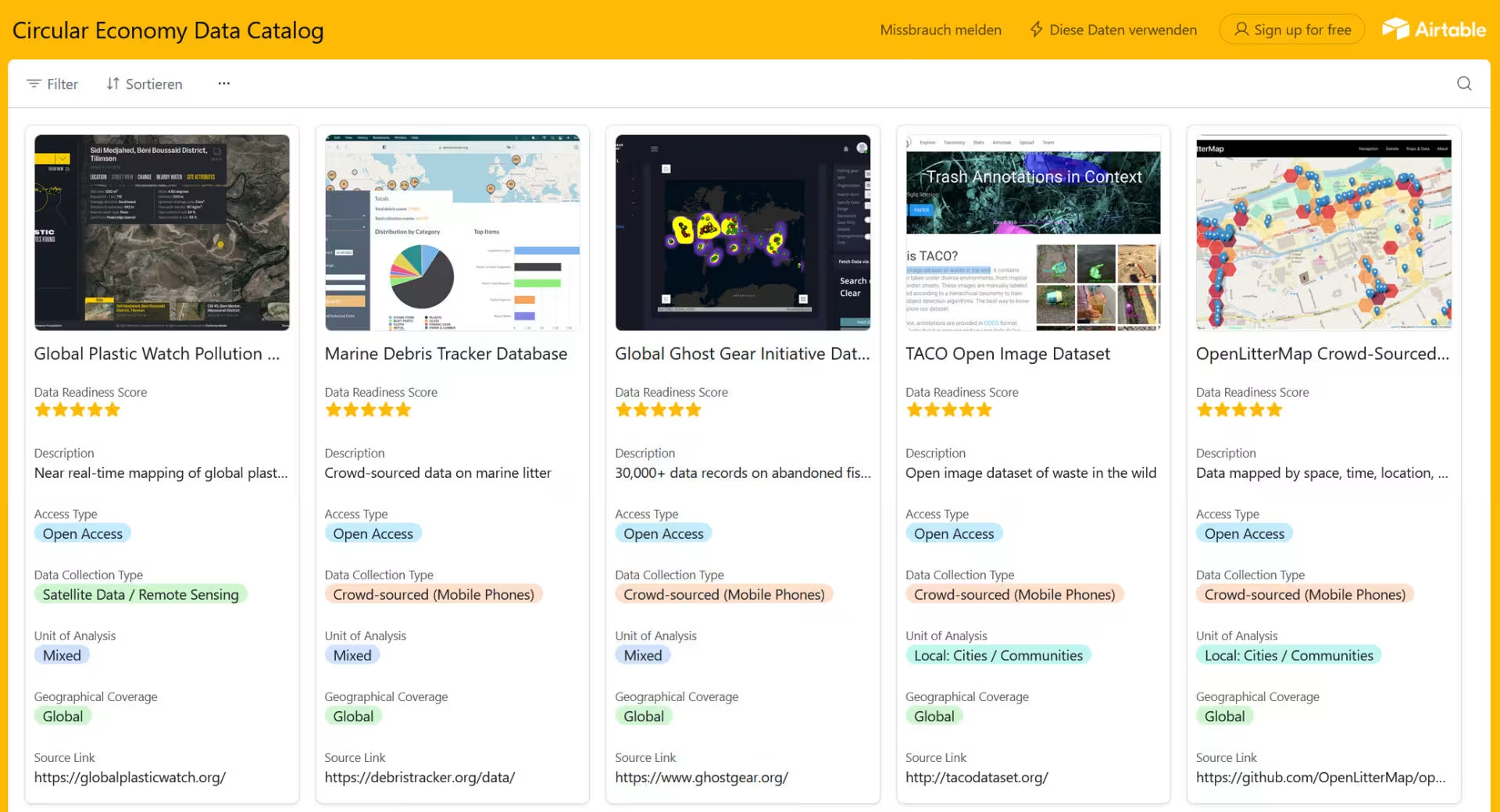
Circular Economy Data Catalog
A comprehensive resource compiling 34 essential datasets for circular economy research and implementation. This catalogue spans diverse geographical regions and leverages multiple technology-based data collection methodologies, from satellite imagery to administrative records.
Designed to facilitate seamless data access for practitioners, the catalogue enables users to efficiently browse available resources or locate specific datasets aligned with their circular economy initiatives. The platform addresses critical barriers in data accessibility that have historically impeded progress toward sustainable material flows and waste reduction strategies.
Particularly valuable for academic institutions, research organizations, policy think tanks, and students engaged in circular economy analysis, this tool represents a significant step toward democratizing access to high-quality, actionable data for sustainable development.
Access the full catalogue and unlock data-driven insights for your circular economy projects.
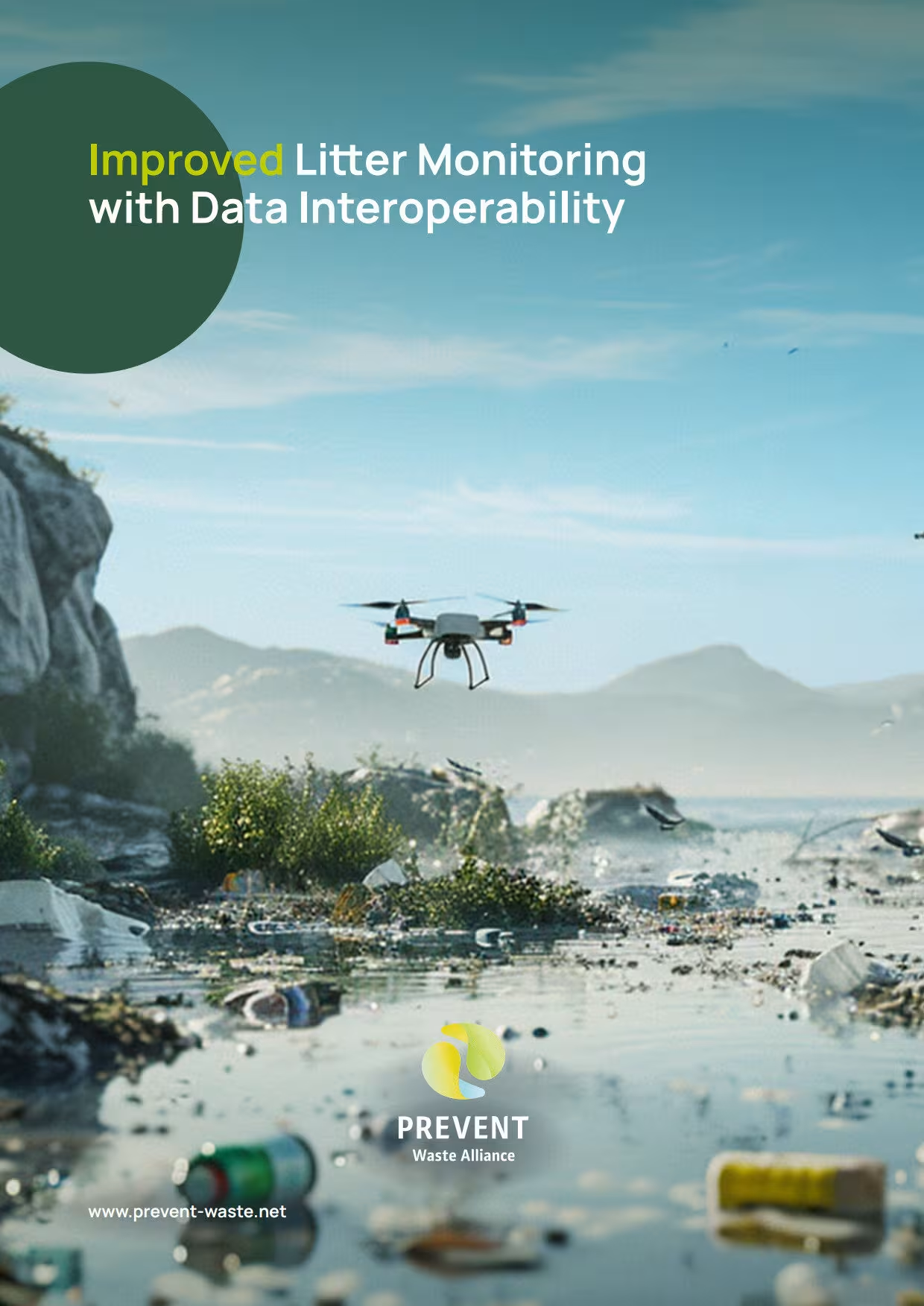
PREVENT Waste Alliance Litter Monitoring Study
Pioneering Data Interoperability for Environmental Impact
Following numerous successful training sessions and our comprehensive masterclass, we’ve developed a self-paced online learning course covering the fundamentals of Data-Powered Positive Deviance (DPPD).
A comprehensive research initiative examining the transformative potential of data interoperability in marine litter monitoring. The PREVENT Waste Alliance brings together over 500 members from diverse sectors to address the urgent challenge of environmental plastic pollution through innovative technological solutions.
Access this groundbreaking research on data-driven environmental protection and join the movement toward comprehensive litter monitoring solutions.e, culturally appropriate solutions.