Walking through a data feminist journey from data dilemma to knowledge co-creation: the road to Women Deliver 2026
The Data Feminism Community of Practice (DFCoP) – born in South-to-South exchange – is now open to all. Join us as we visualise through data our journey from inception to international launch, why feminist and inclusive approaches to data are more important than ever, and how you can become a part of our movement.

01 ──── THE LANDSCAPE
Gender Data Dilemmas in real time
Data does not stand-alone objectively, it exists in context. It’s always telling someone’s story. Therefore, making sense of the need and relevance of a Data Feminism Community of Practice requires us to first take a step out and understand the world it was born into.
The gender data that exists is dangerously low
43% | 22 yrs | <30% | 1 in 4 |
| of SDG 5 indicators still lack all data (2025) | to close SDG gender data gap at pre-crisis pace – well past 2030 | trend coverage for SDG 5 – gender equality | countries track what they spend on gender equality |
68.3%
of national statistics offices worldwide reported reduced funding since January 2025 — a separate but related crisis hitting the infrastructure that produces gender data.
And the data that does exist is now being targeted and misused
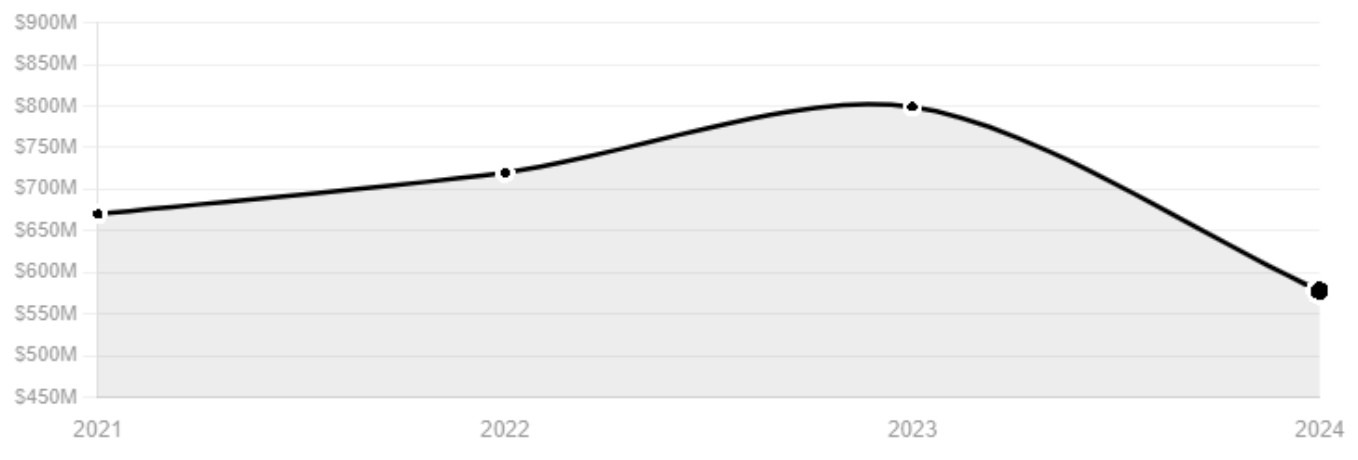
Women’s rights org funding (USD million) — OECD DAC, 2021–2024
The pattern: US: 8,000+ webpages removed or altered— including 3,000+ from the CDC and 3,000+ from the Census Bureau — stripping gender identity and sexual orientation data from public health surveillance systems built over decades.
Where data remains, hostile contexts shape the outcome: S.T.O.P. warns of medical data being used to restrict access to reproductive and gender affirming healthcare; a 2025 UC Berkely report finds the attention on gender equality is being weaponised to facilitate authoritarianism globally.
02 ──── THE JOURNEY
From Idea to Implementation: a Community in Practice
The CoP stems from a collaboration between Deutsche Gesellschaft für Internationale Zusammenarbeit‘s Global Project FAST – Feminism in Action for Structural Transformation – and feminist research collective Ladysmith. It was built slowly, deliberately, and in a moment where gender data is not only increasingly important, but also under attack and being weaponised for opposing purposes. With this in mind, the originating idea of the CoP was to create a safe space to make feminist approaches to data actionable, pragmatic and responsive to real-life data challenges.
MAY 2025 — TIER 1 LAUNCH
GP FAST and Ladysmith launched Tier 1 in early 2025, a space where first, FAST partners from Armenia, Colombia, Rwanda, and Tunisia could come together. The small, tight circle was designed to build trust and foster community around the basic tenets of Data Feminism; premised on the purpose of turning these abstract ideas into real-world applications.
JUNE 2025 – MARCH 2026 — TIER 1 COMMUNITY BUILDING + CO-FACILITATION
The following 13 sessions since the launch paint a picture of a diverse range of topics covered, regional use cases explored, and innovative approaches shared.
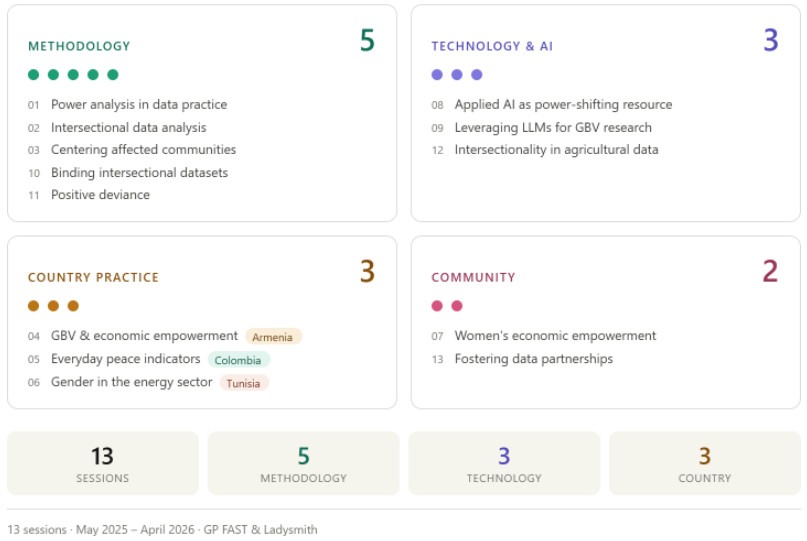
1 — Armenia Women’s economic empowerment and Labour Rights for GBV-Affected Women | |
THE CHALLENGE Women affected by gender-based violence (GBV) often face multiple barriers to economic independence, including workplace discrimination, sexual harassment, labour exploitation, unequal pay, and unlawful dismissals related to gender, age, pregnancy, or family status. These challenges not only limit women’s access to decent work but also undermine their ability to achieve financial security and autonomy. | THE FEMINIST LENS The session explored labour rights through a gender-responsive perspective, highlighting how structural inequalities and discriminatory workplace practices disproportionately affect women, particularly those experiencing or recovering from GBV. Participants discussed available legal protection mechanisms, avenues for seeking redress, and the importance of creating safe and inclusive workplaces. The presentation also showcased practical pathways to economic empowerment and financial independence, drawing on successful initiatives implemented by women’s rights organisations member of Coalition of Domestic Violence Support Centers to support women in overcoming barriers and strengthening their economic resilience. FAST Armenia supports the Coalition through capacity building of member organisations, as well as advocacy and awareness-raising efforts on gender-based and domestic violence. These initiatives contribute to strengthening survivor-centred services, promoting women’s rights, and advancing systemic change to address violence and discrimination against women. |
2 — Colombia Everyday peace indicators–bottom-up methodology | |
THE CHALLENGE Women affected by gender-based violence (GBV) often face multiple barriers to economic independence, including workplace discrimination, sexual harassment, labour exploitation, unequal pay, and unlawful dismissals related to gender, age, pregnancy, or family status. These challenges not only limit women’s access to decent work but also undermine their ability to achieve financial security and autonomy. | THE FEMINIST LENS The CoP examined how participatory data collection can be made genuinely so. Members debated the tension between locally-defined indicators (contextually valid but hard to aggregate) and standardised frameworks (comparable but context-stripped). The session modelled South-to-South exchange in practice: colleagues in Armenia and Tunisia immediately connected it to their own work. |
3 — Tunisia National gender study in the energy sector-key findings | |
THE OPPORTUNITY As a regional pioneer in gender equality, Tunisia has long been recognized for its progressive legal and policy frameworks on women’s rights. Building on this legacy, the FAST Tunisia national gender study explored the energy sector as a key opportunity for advancing gender inclusion. The study examined representation, access, and structural barriers across the energy transition ecosystem, focusing on inclusive governance, capacity development, workforce pathways, and enabling environments. It also identified gaps in genderresponsive monitoring, data collection, and evidence generation to support decision-making. By engaging with institutions seeking to strengthen the integration of gender perspectives in a traditionally male-dominated technical field, the study demonstrated that gender analysis and data are essential for advancing an equitable and effective energy transition. | THE FEMINIST LENS The CoP explored communication strategies for bringing stakeholders with varying levels of familiarity and commitment to gender inclusion along, not by abandoning feminist principles but by leading with evidence. It interrogated how to apply an intersectional lens where gender data barely exists, and how to communicate findings where attitudes on feminism can differ. The session sparked rich exchanges and became one of the most engaging and widely discussed discussions of the year. |
03 ──── THE COMMUNITY
Not just a training, or a platform. A practice in itself.
The methodology of developing the community has been feminist in process, not just in content.
The Community has been a space of iteration, experimentation and learning, prioritising:
- Dialogue over delivery – sessions prioritise conversation and peer exchange over top-down instruction.
- Storytelling as truth-telling – real cases from members’ work serve as entry points for collective insight.
- Power-aware design – who frames the questions, defines the categories, and whose perspectives are absent.
- South-to-South exchange – cross-country dialogue that disrupts North-South knowledge hierarchies.
- Intersectionality throughout – not a separate theme, but the foundational lens guiding all conversations.
04 ──── THE PROGRESS
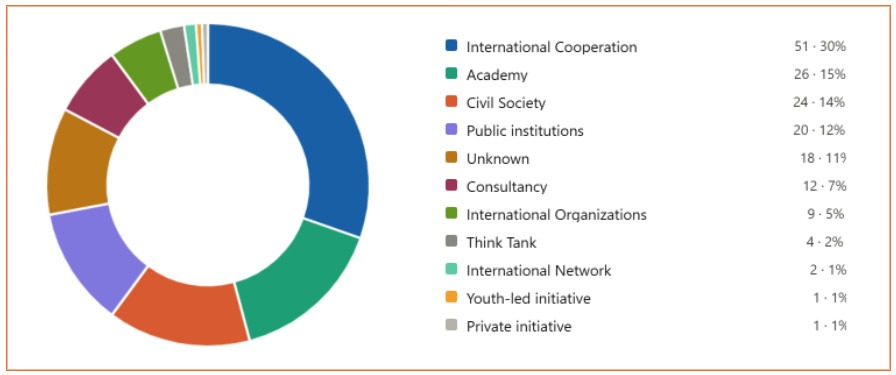
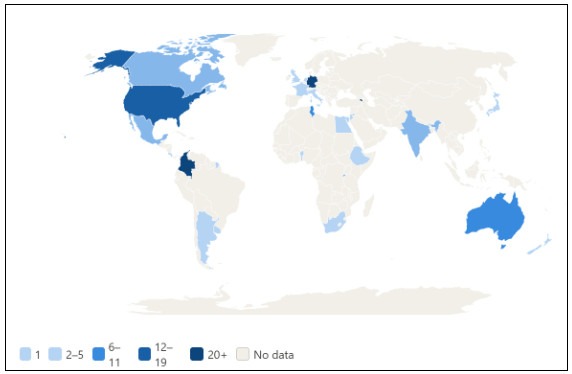
From Design to Delivery: How the CoP looks in numbers and colours.
The diversity of countries (over 25) and representation of institutions and sectors is what makes the DFCoP so powerful and valuable for its members, reflecting its core agenda, south-to-south knowledge exchange.
05 ──── THE MOMENT
Data Feminism Delivered – at Women Deliver 2026
APRIL 2026-NOW – TIER 2 LAUNCH
GP FAST and Ladysmith ran a live CoP session at Women Deliver 2026 – the world’s largest gender equality conference – with 40 practitioners who had never attended one before. Three data dilemmas. One call to action.
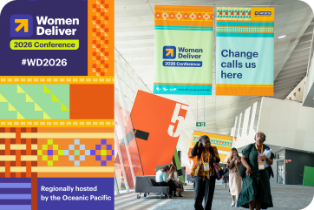

As part of the WD26 Gender and Inclusion Data Working Group, representatives from the DFCoP participated in and spoke at panels from issues around AI, to hands on training around inclusive data, not to mention the dedicated CoP session. The dedicated side event was a simulation of the CoP in real time, exploring 3 prominent data dilemmas – feminist uses of AI, greater feminist approaches vs. never-ending resource constraints and the data to action and impact gap.
The week at WD2026 reflected the above assertions: Inclusive data remains elusive, resources are drying up, spaces are shrinking. However, the DFCoP stands to counter these forces in its own humble way.
TIER 2 IS OPEN
150 practitioners. Your seat is waiting.
The Data Feminism Community of Practice is now open to all practitioners, thinkers and doers working at the intersection of data and gender justice in international cooperation. No prior expertise required – just bring your practice.
→ Join the community at circle.so/dfcop ←
Monthly sessions · Resource library · South-to-South exchange · Circle platform



